




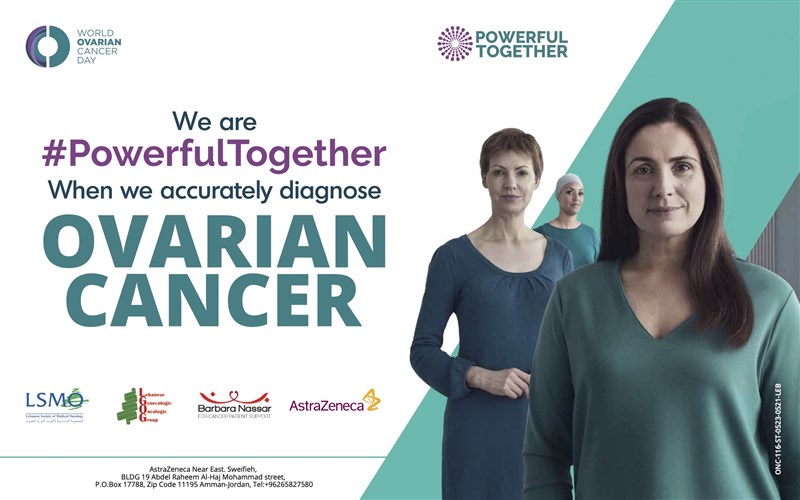
Developments in Ovarian cancer management gearing
towards personalized medicine are helping to better control the disease and
minimize relapses, announced the Lebanese Society of Medical Oncology, the
Lebanese Gynecology Oncology Group, and AstraZeneca at the launch of an
awareness campaign endorsed by the Lebanese Ministry of Public Health to
commemorate World Ovarian Cancer Day.
“With medical advances that improve outcomes for women diagnosed with
Ovarian cancer emerging regularly, early and accurate diagnosis has become
extremely important, making it imperative for patients to visit a specialized
physician as soon as possible for necessary laboratory and genetic testing,” said
Professor Nizar Bitar, President of the Lebanese Society of Medical Oncology.
“Ovarian cancer still must be initially treated in specialized centers by experts on
managing this aggressive disease,” 2 said Professor David Atallah, Vice President
of the Lebanese Gynecology Oncology Group. “Treatment must be led by a
multi-disciplinary team that includes gynecologic oncologists, intensivists,
anesthesiologists, and oncologists, whose essential role is to triage patients
towards primary surgery or chemotherapy – and to assess the disease’s genetic
status which greatly impacts post-surgical outcomes.”
“Every cancer patient must be supported in his or her recovery and be able to
live a full life regardless of the disease or its aftermath, which is our aim at the
Barbara Nassar Association,” said Hany Nassar, President of the Barbara Nassar
Association which offers adult cancer patients support group sessions, conducts
awareness campaigns, and helps provide access to medication when needed.
“We are happy to join forces with the Lebanese Society of Medical Oncology and
the Lebanese Gynecology Oncology Group to shed light on the importance of
early – and most importantly accurate – diagnosis and management of Ovarian
cancer by using the most updated laboratory and genomic testing that offer
much needed hope for women living with this ruthless disease,” said Wael El
Hallak, AstraZeneca oncology medical manager in the Near East.
“We thank the media for its support in helping us raise awareness of this issue;
and call on women to recognize their risks and to discuss Ovarian cancer with
their physicians.”
There are no tests or screening tools available for Ovarian cancer. Symptoms
can often be confused with other less serious conditions. They include increased
abdominal size and persistent bloating; abdominal or pelvic pain; needing to
pass urine more urgently or more frequently; backpain; constant tiredness; and
weight loss. 1,2
Most Ovarian cancers develop after menopause, with half of all cases detected
in women over 63 years old, though the disease does sometimes attack younger
women. 3 Established contributing factors include obesity and smoking; a
condition called endometriosis; family history of Ovarian cancer; 4,5 and genetics. 6
About Ovarian Cancer
Ovarian cancer is the 8 th most common cancer among women worldwide, with
about 300,000 diagnosed annually. 7 All women have at least some risks of
developing Ovarian cancer. In the general population, this is around 2.7%,
though certain factors can increase the risk. 5 Those include mutated genes,
rendering genetic tests essential for allowing patients and doctors to make
informed treatment decisions.
In Lebanon, genito-urinary cancers are the second most common cancers
among women after breast cancer. The Ovarian cancer incidence rate stood at
8.4 per 100,000 in 2016 according to Lebanese Ministry of Public Health
statistics. 8 Over 200 cases of Ovarian cancer are diagnosed yearly in the country,
with an estimated 146 women dying from the disease every year.
Beiruting News

Other news
-
 What's up ?
Healthy Days Fair Takes Achrafieh by Storm
12 october 2026 -
 What's up ?
CAPITAL PARTNERS PRESENTS PRO LOGISTICS AT PROJECT LEBANON 2026, INTRODUCING A NEXT-GEN LOGISTICS HUB FOR NATIONAL TRADE
06 october 2026 -
 What's up ?
Philip Morris Lebanon Unveils GENESIS Sculpture Crafted from Recovered IQOS Devices
06 october 2026 -
 What's up ?
MTV brings artificial intelligence into « Sar El Wa2et »… from episode preparation to live fact-checking
06 october 2026 -
 What's up ?
Roger Zaccar Celebrates His 47th Birthday with a Message of Love for Life and a Charity Initiative Supporting “Enfants de Neptune”
05 october 2026 -
 What's up ?
MEA Chairman Mohamad El Hout Honored as Commander of Belgium’s Order of Leopold II
02 october 2026 -
 What's up ?
SCHOLL CELEBRATES 70 YEARS OF THE ICONIC PESCURA
02 october 2026 -
 What's up ?
Chef Aline Kamakian wins gold Cannes Corporate Media & TV Awards
27 september 2026 -
 What's up ?
Spinneys Expands Its Offering By Offering Selected Costco Products
27 september 2026 -
 What's up ?
ANGELINA PARIS CELEBRATES THE OPENING OF ITS FIRST LEBANESE FLAGSHIP AT ABC DBAYEH
27 september 2026 -
 What's up ?
L'ORÉAL PARIS HONOURS SIX LEBANESE CHANGEMAKERS AT FOURTH 'WOMEN OF WORTH' EDITION
24 september 2026 -
 What's up ?
TotalEnergies Marketing Lebanon Engages Close to 16,000 Students through the 2026 VIA Road Safety Programme
23 september 2026 -
 What's up ?
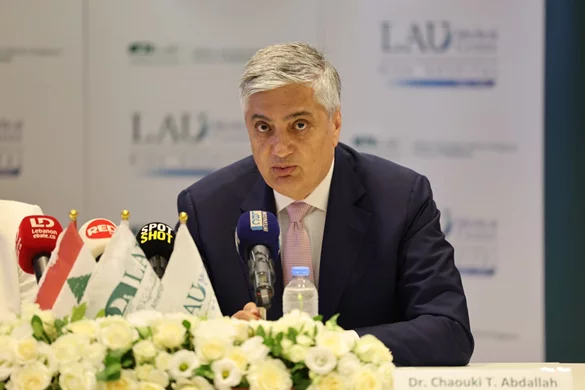
LAU Medical Center–Rizk Hospital Introduces The Most Advanced and Comprehensive Robotic Surgery Program During Dedicated Roundtable Event
21 september 2026 -
 What's up ?
TAWFEER EXPANDS HYPERDISCOUNTER MODEL IN LEBANON TO ADVANCE CONSUMER PROTECTION AMID SOARING INFLATION AND RISING SHELF PRICES
07 september 2026 -
 What's up ?
RANDOM Opens at Beirut Waterfront: A New Kind of Venue With No Fixed Identity and No Night Repeated
01 september 2026 -
 What's up ?
Beirut Beat Festival
30 august 2026 -
 What's up ?
George Nehme Joins the Jury of the Byblos International Film Festival
20 august 2026 -
 What's up ?
Farah Nakhoul Returns With “Machghoul,” a Romantic Lebanese Single Exploring Love, Longing and Uncertainty
19 august 2026 -
.webp) What's up ?
What's up ?Born Interactive Celebrates 30 Years by Shaping What Matters Next
05 august 2026 -
 What's up ?
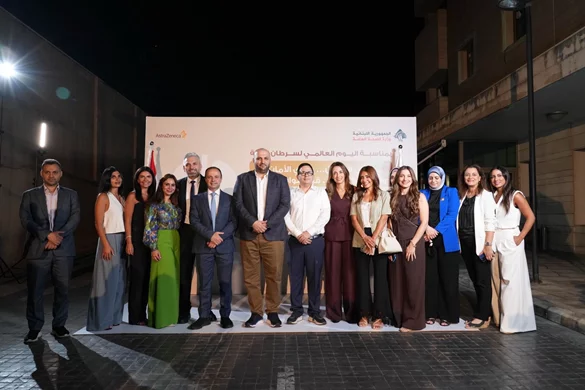
On World Lung Cancer Day, Lebanon’s Ministry of Public Health and AstraZeneca Launch National Campaign to Promote Prevention and Early Detection
31 july 2026
